This is for the woman who opens her cupboard at six o’clock, sees a great deal of nothing, and orders takeout again. Not because she cannot cook, but because no one ever showed her what a working pantry actually holds. A good pantry is not a wall of matching jars. It is a small, deliberate set of ingredients that lets you make dinner on a Tuesday without a plan and without a trip to the store.
We will build it in layers. Start with what earns its place, then learn how to tell the good from the ordinary, then fill the shelf at whatever pace suits you.
What a pantry is for
A pantry has one job: to stand between you and the question of what to eat. When the shelf is right, you can always make something. A pot of pasta with garlic, oil, and chile. Beans warmed with tomato and cumin. Rice, a fried egg, soy sauce, and whatever green thing is in the crisper. These are reflexes more than recipes, and the pantry is what makes them possible.
So the goal is not abundance. It is coverage. A handful of ingredients from each of a few families, chosen well, will carry you further than a cupboard crammed with things you bought once and never opened.
The families to cover
Think in groups rather than lists. Each group does a job, and you want at least one good option in each.
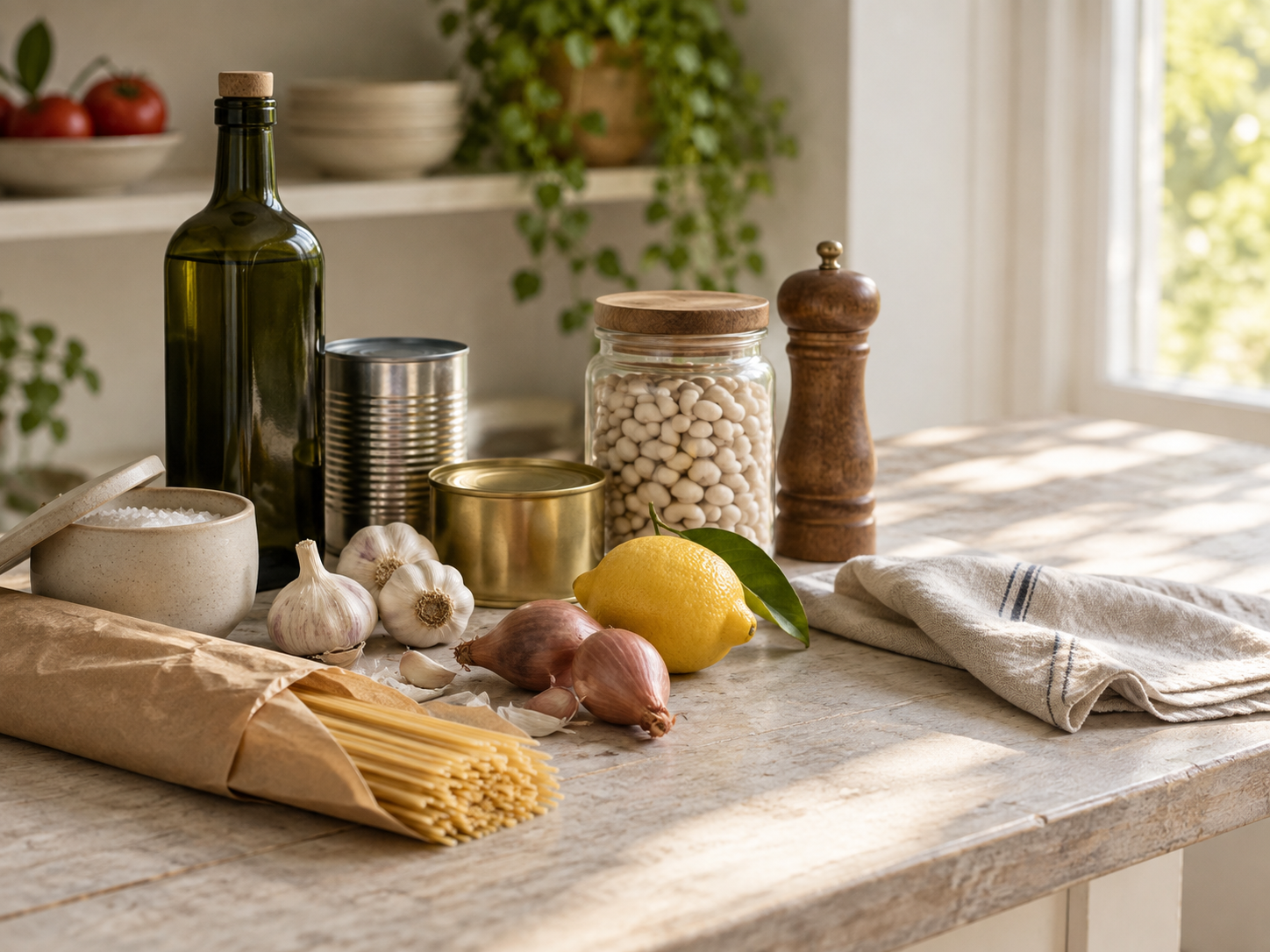
Fats and oils. A neutral oil for cooking with heat, such as grapeseed or a light olive oil. A good extra-virgin olive oil for finishing, meaning the drizzle you add at the end, off the heat. Butter, kept in the freezer if you go through it slowly.
Acids. This is the group most home cooks are missing, and it is the reason their food tastes flat. Keep a red wine vinegar, a white or sherry vinegar, and lemons on the counter. Acid is what wakes a dish up when it tastes like it needs salt but does not.
Salt and pepper. One box of kosher salt for cooking, which lets you feel the amount between your fingers. A small dish of flaky salt for the table. Whole peppercorns in a grinder, not the pre-ground dust.
Aromatics. Onions, garlic, and shallots live in a bowl on the counter, out of the light. Fresh ginger keeps in the freezer and grates straight from frozen.
Starches. A long pasta and a short one. Long-grain rice for everyday, and a short-grain if you like it. Something to toast.
Tinned and jarred. Whole peeled tomatoes, better than crushed because you control the texture. Beans, two or three kinds. Tuna or sardines packed in olive oil. Anchovies, which melt into a sauce and leave behind savour, not fish.
Seasonings with reach. Soy sauce, Dijon mustard, honey, and a chile in some form, whether flakes or a jarred paste. A hard cheese like Parmesan, which keeps for weeks and lifts almost anything.
Dry backbone. A few spices you actually use, bought small and replaced when they lose their smell. Cumin, smoked paprika, a good curry powder, dried oregano, bay leaves. Flour, sugar, and baking soda if you bake at all.
That is the whole shape of it. Notice how short it is. A pantry that covers these families is a pantry that cooks.
How to know it is good
Quality in a pantry is quiet. It shows up in taste, not packaging.
Olive oil should smell green and a little peppery, and it should come in a dark bottle with a harvest date on it, not merely a best-by date. Light and age are what ruin oil. Buy it in a size you will finish within a few months, and store it away from the stove.
Tinned tomatoes are worth being particular about. Look for whole peeled tomatoes with a short ingredient list, ideally just tomatoes and their juice. San Marzano on the label from a trusted brand is a good sign. Cheap tomatoes are watery and sour, and no amount of cooking fixes them.
Salt should be a single ingredient. Kosher salt with no anti-caking agents behaves predictably, which matters when a recipe tells you how much to use.
Spices are good when they still smell like themselves. Open the jar. If cumin does not smell strongly of cumin, it is doing nothing for your food. A spice you replace often is worth more than a big jar going grey in the back.
Vinegar and mustard should taste sharp and clean. Dijon should bite. These are inexpensive places to buy well, because the difference between ordinary and very good is a dollar or two.
Beans and tinned fish reward a small step up: beans that hold their shape, fish packed in olive oil rather than water. You will taste it, and these are still humble groceries.
Building it, at your own pace
You do not need to fill the shelf in a weekend, and you certainly do not need to spend to do it. Start with what you have, and rise only when you are ready.
Begin with what is already in your kitchen. Pull everything out and group it into the families above. You will find you already own more than you thought, and also that you have three bottles of the same forgotten sauce. Keep what you use. Set the rest aside.
Then borrow, in the ordinary sense. When a recipe calls for a spice you will use once, ask a neighbor or a sister for a spoonful before buying a whole jar. It is a small, old-fashioned kindness, and it saves your shelf from clutter.
Then shop the everyday well. Most of a fine pantry comes from the regular grocery store and from a good tin. Better tomatoes, real Dijon, whole peppercorns, kosher salt. None of this is dear, and it is where you make the biggest difference for the least money.
Then invest, once, in the few things you reach for daily. A very good finishing olive oil. A pepper grinder that will outlast the decade. A salt cellar for the counter. Buy these slowly, one at a time, when the moment feels right. They are the pieces you will still be using in twenty years.
Where to find things, if you are buying new
Most of this belongs in your cart at the market you already visit. For the few pieces you may want to buy with more care, here are sources that hold up.
For everyday staples and spices in sensible sizes, a standard grocery order or Amazon covers it well. For the glass canisters and salt cellar that keep a pantry orderly and lovely, Williams Sonoma has well-made options that hold up to daily use. And for the countertop pieces you intend to keep for good, a pepper mill, a stoneware crock, a small pitcher of oil by the stove, look to Serena and Lily or Rejuvenation when you are ready to invest. Estate sales remain the finest source for heavy crocks and old glass jars, with more character than anything new.
Buy the food first. The beautiful jars can wait. A pantry earns its keep by what it lets you cook, not by how it photographs.
The tear-out checklist
Keep this inside a cupboard door. When a line runs low, it goes on the list.
The working pantry, at a glance:
- Fats: neutral cooking oil, extra-virgin olive oil for finishing, butter
- Acids: red wine vinegar, white or sherry vinegar, fresh lemons
- Salt and pepper: kosher salt, flaky finishing salt, whole peppercorns
- Aromatics: onions, garlic, shallots, fresh ginger
- Starches: long pasta, short pasta, long-grain rice, bread to toast
- Tinned: whole peeled tomatoes, beans in two or three kinds, tuna or sardines in oil, anchovies
- Seasonings: soy sauce, Dijon mustard, honey, chile flakes or paste, a hard cheese
- Spices, bought small: cumin, smoked paprika, curry powder, dried oregano, bay leaves
- Baking, if you bake: flour, sugar, baking soda
How to know it is good, in one line each:
- Olive oil: dark bottle, harvest date, smells green and peppery
- Tomatoes: whole peeled, short ingredient list
- Salt: one ingredient, no additives
- Spices: still smell strong when you open the jar
- Beans and fish: hold their shape, packed in olive oil
The order of buying: use what you have, borrow what you need once, shop the everyday well, invest last and slowly.
A stocked pantry is a small form of self-respect. It says that dinner, most nights, is something you can manage on your own terms. Begin with one shelf. Fill it with care. The rest will follow.