Linen is the rare thing that improves with handling. Most of what we own begins its decline the moment we bring it home. Linen does the opposite. It softens. It relaxes. It takes on the particular character of the household that keeps it. A linen sheet you have washed two hundred times is better than the one you bought, and there is very little else you can say that about.
That is the whole case for it. Not that it is expensive, or rare, or a mark of anything. Simply that it lasts, and that it rewards use rather than punishing it. This guide is how to choose it, how to keep it, and. If and when you decide to bring some home. Which pieces are worth the shelf space.
What makes linen different
Linen is made from flax, a plant that has been woven into cloth for something like thirty thousand years. The fiber is longer and stronger than cotton, which is why linen outlasts it, and hollow, which is why it breathes. It is cool in summer and warm enough in winter, because it regulates rather than insulates. It absorbs moisture without feeling damp. It resists the quiet grime of daily life better than almost anything.
It also wrinkles, and here we should be plain: the wrinkles are the point. A linen that stayed perfectly smooth would be a linen cut with synthetics, and it would neither breathe nor soften nor last. The gentle rumple is the signature of the real thing. Make peace with it early. It is the look of a bed that is meant to be slept in and a table that is meant to be used.
Buy it once. Wash it often. Hand it down.
The kinds worth knowing
Not all linen is equal, and a few names are worth carrying with you. Belgian linen is the standard by which the rest is measured. The flax grown in the region along the Lys river is prized for its strength and soft hand. French linen is its close cousin, often a touch more rustic and relaxed. Irish linen is the crisp, fine, formal end of the family, historically the choice for the best napkins and handkerchiefs.
What matters more than the country is the honesty of the cloth. Look for one hundred percent linen, not a blend. Feel the weight: good linen has substance in the hand without being heavy. Hold it to the light and you want to see a close, even weave, not a loose one that will thin and pill. Price is a poor guide here, and a beautiful piece is as likely to come from an estate sale as a showroom.
Where it belongs
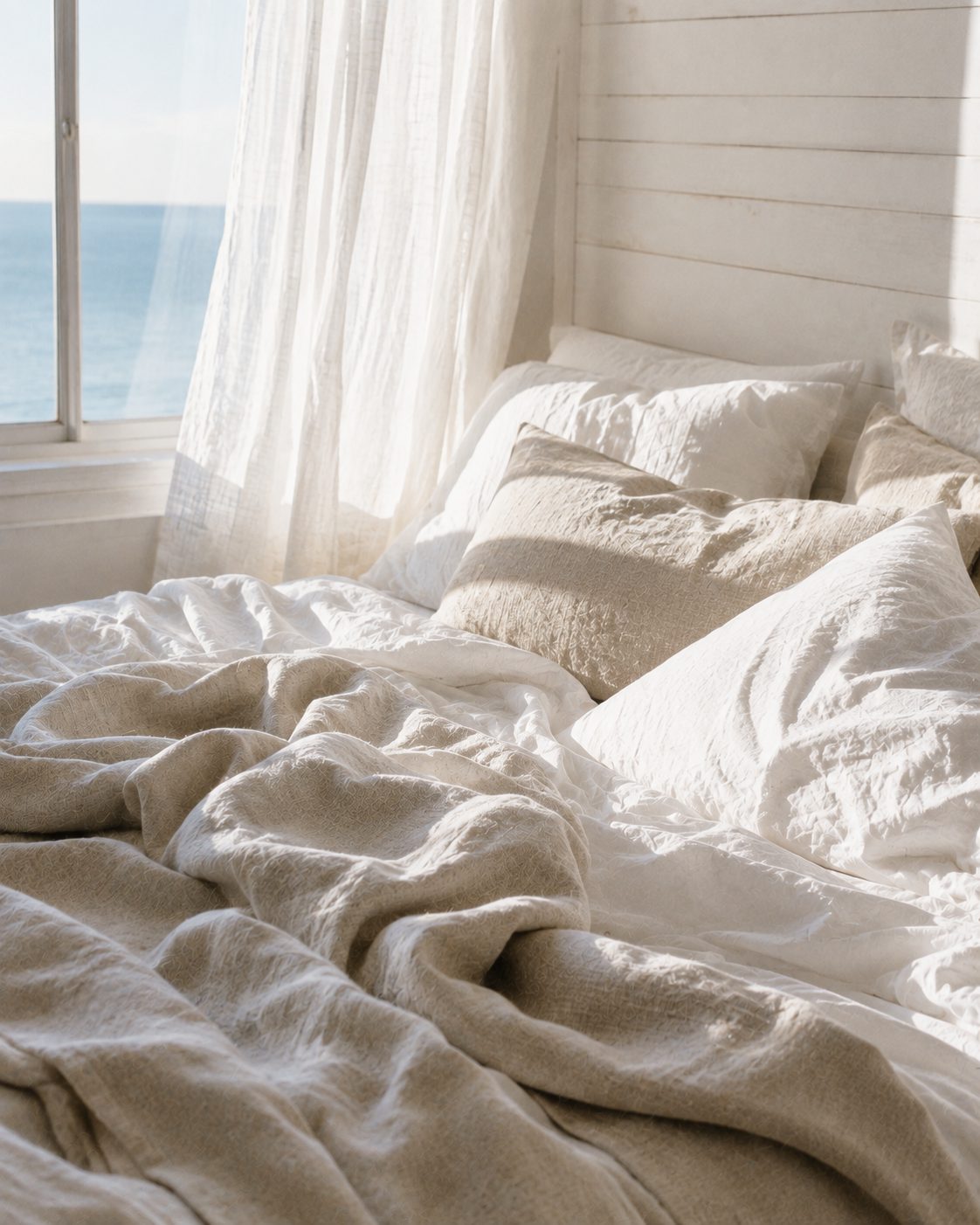
The bedroom. This is linen’s home. Sheets, duvet covers, pillowcases. The first night on linen is a slight adjustment; by the second week you will not go back. It sleeps cooler than cotton and grows softer for years. Start here if you start anywhere.
The table. Napkins and a runner or cloth transform an ordinary supper into an occasion, and they do it without effort or announcement. Linen napkins, unlike paper, are a decision you make once. They wash, they wear beautifully, and they quietly outlast every set of guests they meet.
The kitchen. Linen dish towels dry glassware without lint and get more absorbent with age. An apron in natural linen is the kind of thing that looks better in year three than year one. These are the small, daily pieces that make the case for the fabric most persuasively, because you handle them constantly.
The bath. Linen and cotton-linen hand towels dry quickly and resist the mustiness that plagues thick terry. They read as considered and cost you nothing in upkeep. A stack of them by the sink is one of the quietest luxuries in a house.
How to care for it
Linen asks for less than you would think. The instinct to treat it delicately is the one thing that will let it down; linen wants to be used and washed, not spared.
Before you buy anything
The most beautiful linen in many homes was never bought new. Estate sales and thrift shops are full of it. Vintage tablecloths, monogrammed napkins, hand-finished sheets made to a standard that is hard to find on a shelf today. The weight and the clarity of the weave tell you everything; the price tells you very little. Some of the finest pieces you will ever own can be found this way, each with a history already in it.
And if this is a season where new linens are not the priority. For many of us, they are not. The guidance still holds. Use what you have. Borrow the tablecloth. A supper among people who feel welcome is not improved by better napkins. Build slowly, one piece at a time, over years if that is what it takes. That is not a lesser way to do it. It may be the truer one.
The edit
For those ready to bring a few pieces home new, below is a short, considered list. The pieces that earn their place and last. Not everything at once. One or two, chosen well, and added to over time.
Washed linen sheet set
Where to begin. Cooler than cotton, softer every season. In white or oatmeal it disappears into any room and outlives the bed frame.
Linen duvet cover, oat
The single piece that makes a bed look considered. Oat forgives everything and pairs with white sheets or none.
Linen pillowcases, set of two
The gentlest introduction to linen if you are not ready for a full set. Kind to skin and hair, and easy to love.
Linen napkins, set of four
The end of paper. A decision made once that wears beautifully and dresses a table without a word of effort.
Linen table runner
The lightest possible way to mark an occasion. Lay it over bare wood and the table is already half set.
Linen tablecloth, cream
For the gatherings that matter. It creases, it drapes, it softens. And it will see decades of them if you let it.
Linen dish towels, set of three
Lint-free on glassware and more absorbent with age. The small daily piece that makes the whole case for linen.
Natural linen apron
Looks better in year three than year one. The kind of thing worth having on the hook whether or not you cook much.
Linen hand towels, pair
Quick to dry, resistant to the mustiness of thick terry. A quiet upgrade by the sink that asks nothing in return.
A note: where a piece can be bought new, I link to options I believe in and would keep myself. I may earn a small commission, at no cost to you. I would encourage you to check estate sales and thrift shops first. Those pieces often have more character anyway.