A thank-you note is the smallest piece of correspondence you will ever write, and one of the most remembered. People keep them. Years later they turn up in a drawer, and the person who received one still recalls who sent it and who did not. The good news is that a proper thank-you note is not hard to write. It asks for sincerity, a little structure, and the willingness to sit down before the feeling fades.
When a note is owed
Send a written note for a gift received by mail, for hospitality that involved real effort, for a job interview, for a kindness during illness or grief, and for any wedding or shower gift without exception. A text is acceptable for a small everyday favor. It is not acceptable for anything someone planned, paid for, or lost sleep over. When in doubt, write the note. No one has ever been offended by receiving one.
Timing
Aim to send within a few days. Within two weeks is still gracious. If more time has passed, write anyway and do not apologize at length. A late note that arrives is worth far more than a timely one that never gets written. One honest line will do: “This is overdue, and my gratitude is not.”
The structure
Every good thank-you note moves through the same five beats. Keep them in order and the note almost writes itself.
- Greeting. “Dear Margaret,”
- The thanks, named specifically. Say what the gift or gesture was. Never write “thank you for the gift.” Name it.
- The detail. Say how you will use it, where it sits, or what the gesture meant. This is the line that proves you are not writing a form letter.
- The forward look. A warm sentence about seeing them, or a wish for them.
- The close and signature. “With love,” or “Fondly,” or “Warmly,” then your name.
Four to six sentences is plenty. A thank-you note is not a letter. Its brevity is part of its grace.
Example notes
For a gift.
Dear Margaret,
Thank you for the wool throw. It has already claimed the chair by the window, which is where I read in the mornings, and it is exactly the color I would have chosen and never thought to. You have a gift for knowing what a room is missing.
I hope we will see you before the summer is out.
With love,
Anne
For dinner or hospitality.
Dear James and Clare,
Thank you for Saturday. The lamb was wonderful, and the evening more so. There is a particular ease at your table that I always leave wanting to bring home with me.
Let us have you here soon. It is our turn, and long overdue.
Fondly,
Anne
After a job interview.
Dear Ms. Reyes,
Thank you for your time yesterday. Our conversation about the editorial calendar clarified for me how much I would like to do this work, and to do it with your team. I am grateful for the care you took in walking me through the role.
I look forward to hearing from you.
Sincerely,
Anne Whitfield
For a wedding or shower gift.
Dear Aunt Ruth,
Thank you for the silver serving dish. It belonged to your mother, and that it now comes to us means more than I can fit on this card. We will use it, not save it, which I know is what you would want.
We cannot wait to see you in June.
With love,
Anne and Peter
For a kindness during a hard time.
Dear Louise,
Thank you for the soup, and for leaving it without knocking. You understood exactly what the week required. I have thought of you every time I have eaten it, which is to say often.
Gratefully,
Anne
How to know it is good
Read it back and ask one question: could this note have been sent to anyone, about anything? If yes, it is not finished. A real thank-you note contains one detail that could only belong to this person and this gift. “The color I would have chosen and never thought to.” “You left it without knocking.” That specific line is the whole point. Everything else is scaffolding.
Check also that you have not apologized more than once, that you have not asked for anything, and that the note is warm rather than dutiful. If it reads like a receipt, start again.
On paper and pens
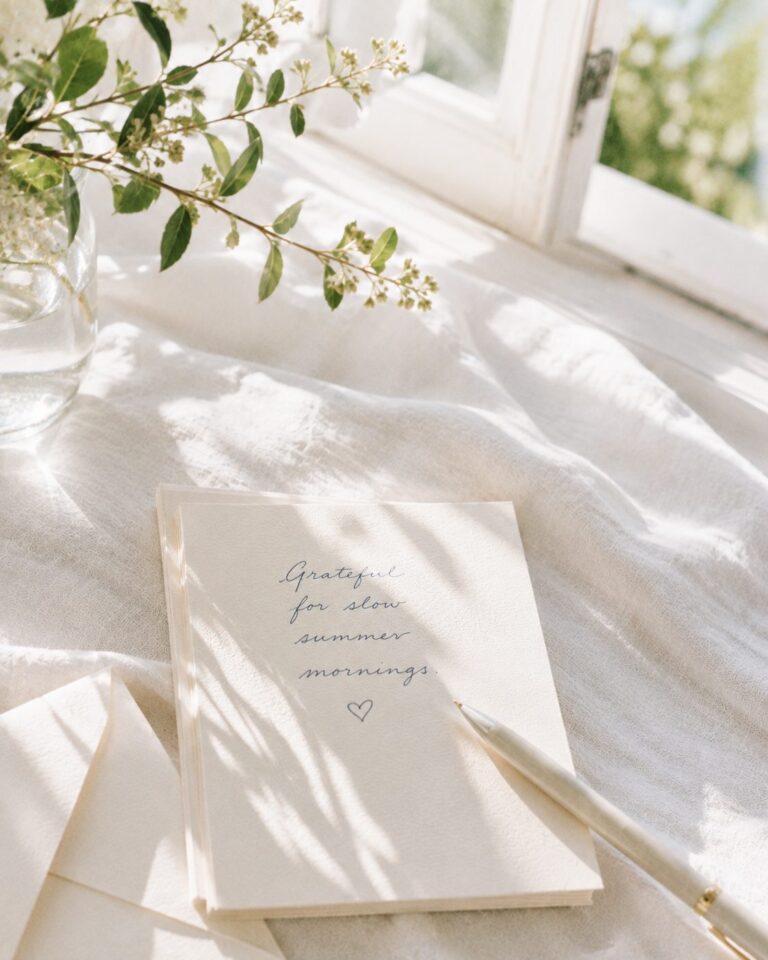
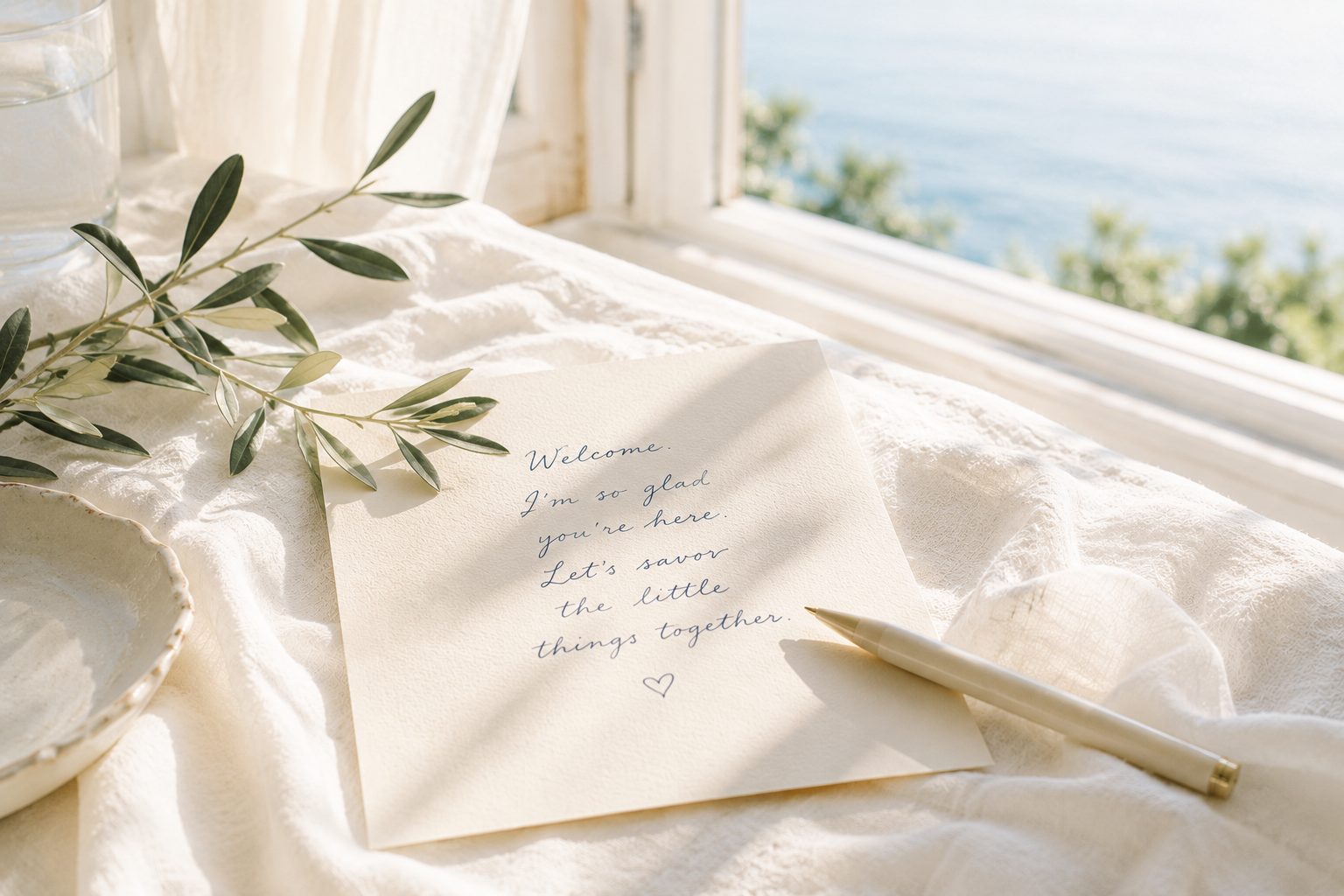
You do not need fine stationery to write a fine note. A clean folded card and a pen that does not skip will carry your words perfectly well. Use what you have. A plain white card from the drugstore, written in a steady hand, outranks the most beautiful engraved stock left blank.
When you are ready to keep proper cards on hand, build slowly. Borrow the habit before you buy the paper: keep a small box of anything by the door and use it. Estate sales and church rummage tables are full of boxed correspondence cards, often unused, often monogrammed with initials near enough to yours to be charming. When you are ready to invest, a single box of good cotton cards will outlast years of occasions.
Before you buy anything
The sincerity is the whole of it. A note written on plain paper, in your own hand, does the job a fine card cannot do on its own. Before buying anything, sit down and write the one you already owe.
When you are ready to keep supplies on hand, choose a small set you will actually reach for. A drawer with good paper, a reliable pen, and stamps already in it removes the last excuse for waiting.
The edit
A few things that make the habit easier to keep.
Correspondence card set
Plain, heavy stock, no monogram required. The right size for a note that says enough without asking for more.
A reliable fountain or rollerball pen
Handwriting looks better with the right pen. Keep it in the drawer, not lost among the ballpoints.
A standing supply of stamps
The note delayed by a missing stamp is the note that never gets sent. Buy a book of them before you need one.
A note: where a piece can be bought new, I link to options I would keep myself. I may earn a small commission, at no cost to you. I would check estate sales and thrift shops first. Those pieces often have more character anyway.